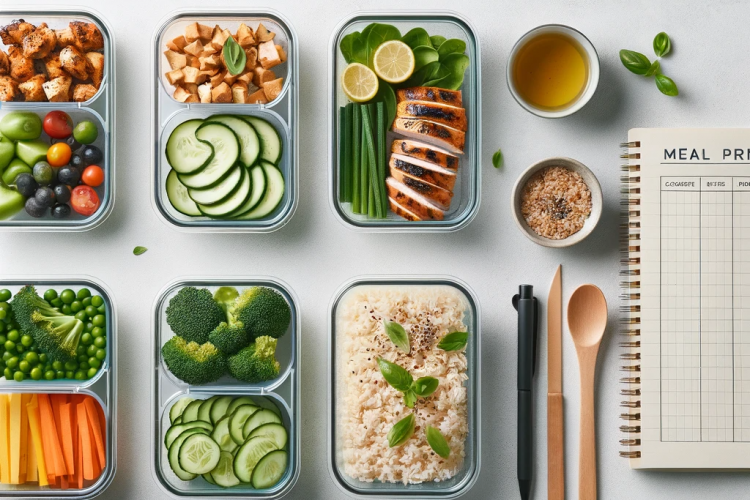
Embarking on a journey toward healthier eating can be both exciting and overwhelming. One of the most effective strategies to maintain a healthy diet is meal prepping. Meal prepping not only helps in making healthier food choices but also saves time and reduces stress about daily meal decisions. This guide is tailored for beginners who are ready to embrace meal prep as a lifestyle change.
What is Meal Prepping?
Meal prepping involves planning and preparing meals ahead of time. This can be as simple as chopping vegetables for the week or as involved as cooking all your meals for the week in one day. It’s a flexible concept that can be adapted to fit any dietary preference or lifestyle.
Benefits of Meal Prepping
- Healthier Eating Choices: With meals planned and prepared in advance, you’re less likely to opt for unhealthy fast food.
- Time Efficiency: Cooking in bulk saves time throughout the week.
- Budget-Friendly: Buying ingredients in bulk and avoiding frequent take-outs saves money.
- Portion Control: Prepping meals helps in managing portion sizes, which is essential for weight management.
Getting Started with Meal Prepping
Step 1: Planning Your Meals
- Set Your Goals: Are you meal prepping for weight loss, muscle gain, or just to eat healthier?
- Choose Your Meals: Start with recipes that you enjoy and are comfortable cooking. Consider nutritional balance – a mix of protein, carbohydrates, and fats.
- Make a Grocery List: Based on your chosen recipes, list down all the ingredients you’ll need.
Step 2: Scheduling a Prep Day
- Pick a Day: Most people find it convenient to prep on Sundays, but any day that fits your schedule will work.
- Allocate Time: Set aside a few hours dedicated to prepping. As you get more experienced, you’ll become faster and more efficient.
Step 3: Prepping Your Meals
- Start with Washing and Chopping: Prep all your fruits, vegetables, and herbs.
- Cook in Batches: Cook multiple portions of your meals. Consider using a slow cooker or pressure cooker for efficiency.
- Storage: Use good quality, airtight containers to store your meals. Label them with dates if necessary.
Step 4: Storing and Eating Your Meals
- Refrigeration vs. Freezing: Most meals can be stored in the fridge for a few days, while others can be frozen for longer shelf life.
- Reheating: Always reheat your meals safely – either in a microwave, on a stovetop, or in an oven.
Tips for Successful Meal Prepping
- Start Small: Begin with prepping for just a few days to avoid feeling overwhelmed.
- Mix It Up: To avoid boredom, prepare a variety of meals or try new recipes each week.
- Invest in Quality Containers: Good containers keep food fresh longer and make transportation easier.
- Listen to Your Body: Adjust portion sizes and ingredients as per your body’s nutritional needs.
Conclusion
Mastering meal prep is a journey of learning and experimenting. It’s not just about eating healthy; it’s about making lifestyle changes that contribute to a better you. Remember, consistency is key. Happy prepping!